
Windshield Tint vs Windshield Strip: What to Ask Before Installing
Quick answer
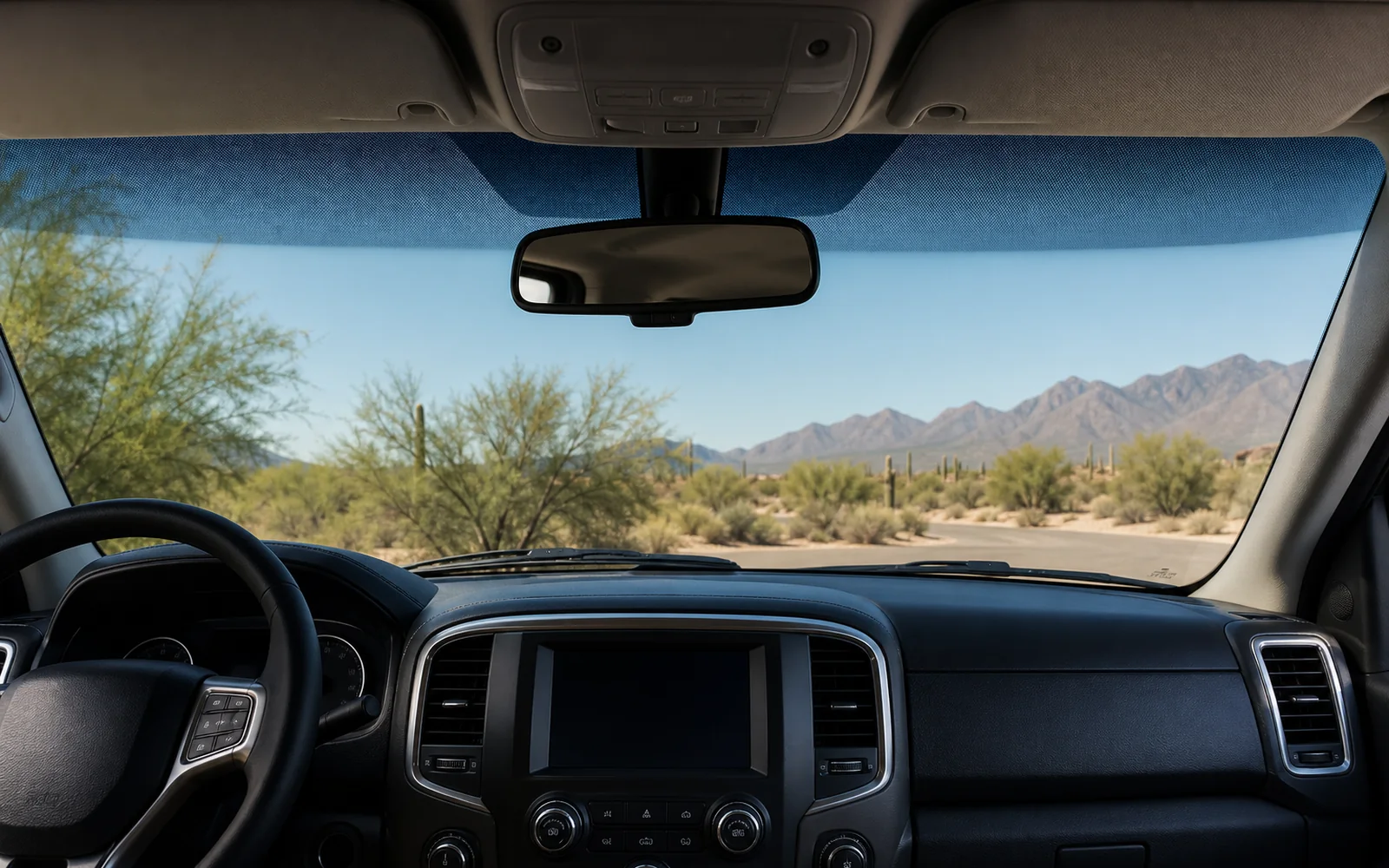
A windshield strip is a narrower top-band solution for sun glare near the driver's line of sight. Full windshield tint is a larger comfort and visibility decision, so it should be discussed carefully before installation.
A windshield strip and full windshield tint solve different problems. A strip targets the upper portion of the windshield where sun can hit the driver's eyes. Full windshield film is a larger comfort conversation and needs careful review for visibility, film type, and legality.
In Arizona, the statute includes specific language about transparent material on the topmost portion of the windshield, including placement and color restrictions. That is why windshield questions belong in the estimate form instead of being treated as an afterthought.
Ask whether the shop recommends a strip, full windshield film, or no windshield work at all. The answer should consider the vehicle, the driver, the legal context, and how much night visibility matters.
Questions to answer before the quote
- Is the driver asking for a top windshield strip, full windshield film, or both?
- Does the vehicle already have factory shading at the top of the windshield?
- Does the driver spend more time fighting sunrise, sunset, or midday glare?
- How important is nighttime visibility on darker roads?
In Tucson, windshield questions come up often because the sun angle can be punishing on east-west routes. A strip may help reduce the harsh band of light near the top of the glass, but it should be placed with the vehicle and Arizona requirements in mind.
Full windshield film is a different conversation because every driver sees through that glass all the time. The installer should explain what film is being considered, how it affects visibility, and why it does or does not make sense for that specific vehicle.
Dawn Till Dusk added windshield and windshield strip questions to the quote form for this reason. It helps separate simple side-and-rear tint requests from projects that need a more careful windshield discussion before the vehicle is scheduled.
Why full windshield tint is a bigger decision
A top strip affects a smaller area of glass, while full windshield film changes the driver's view through the main window of the vehicle. That does not mean it is never appropriate, but it means the installer should explain the tradeoffs clearly. Daytime glare, heat control, night visibility, and legal context should all be part of the same conversation.
Some customers ask for windshield work because the dashboard area feels hot, while others are mainly fighting low-angle sun. Those are different problems. A strip may help one customer, while another may need to rethink side glass, rear glass, or the film line before touching the windshield.
The safest next step is to put the windshield request in writing when asking for the estimate. That gives Dawn Till Dusk time to review the vehicle and recommend a path before the customer expects a quick add-on at the appointment.
Photos can help here too. A straight-on photo of the windshield and a photo from the driver's seat can show existing top shading, sensor areas, mirror mounts, and the shape of the glass. Those details can affect the installer conversation before a film is chosen.
Customers should expect a careful answer, not a rushed yes. Windshield work sits at the intersection of comfort, safety, and legal requirements, so it is one of the best examples of why a detailed quote request matters.