
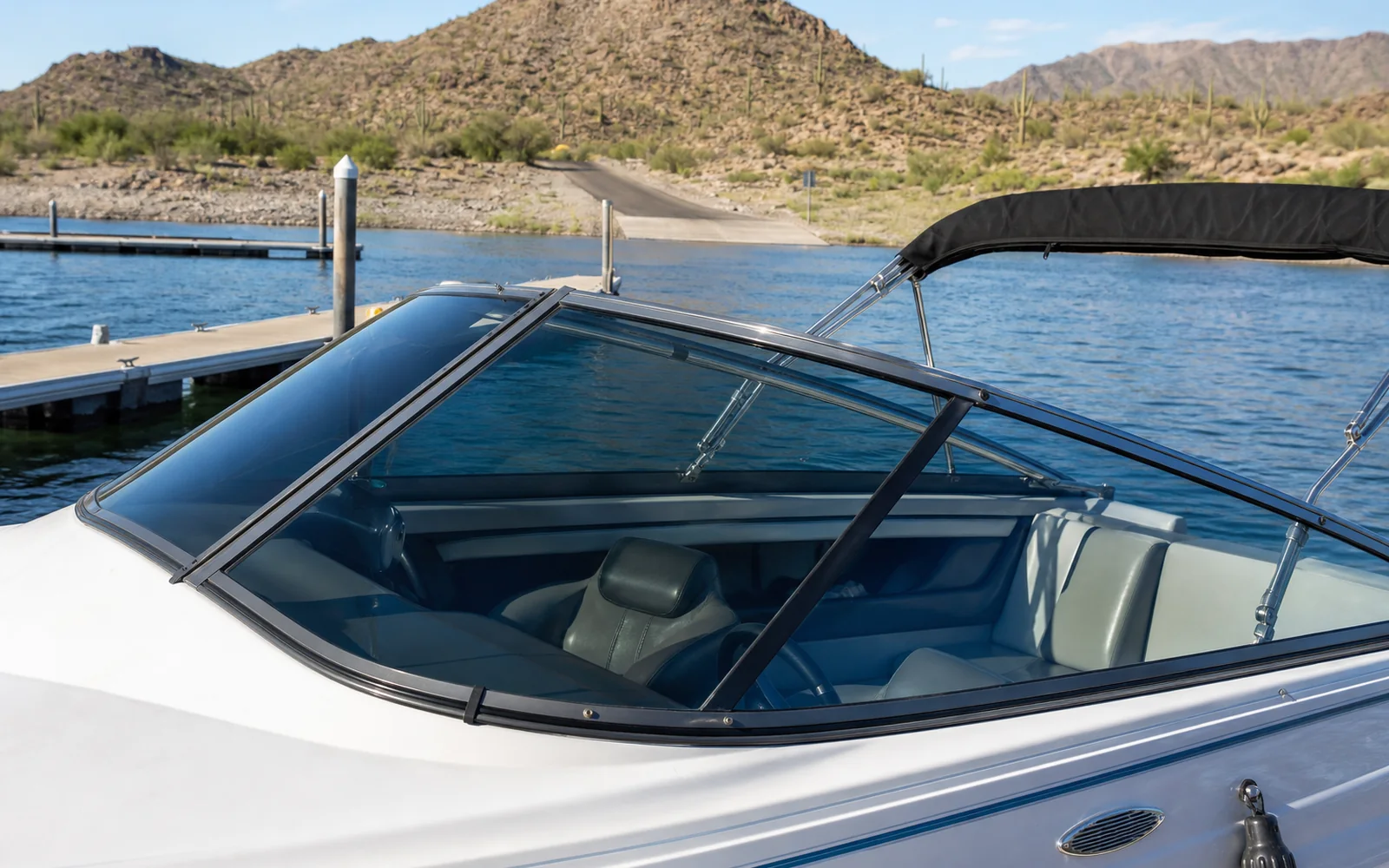
Boat Window Tint for Arizona Lakes: Comfort, Glare, and Style
Quick answer
Boat window tint can help with glare, comfort, and style on Arizona lakes, but marine glass should be quoted by shape, use, storage, and visibility needs. The right tint should look sharp without making early or late trips harder to see through.
Boat tint has to deal with a different kind of glare. Sun reflects off the water, bounces across the windshield, and can make long days on Arizona lakes more tiring than they need to be.
Marine tint should balance glare control, visibility, and appearance. A dark, clean windshield can sharpen the look of the boat, but the film still needs to match how and when the boat is used. Early morning, full sun, and late return trips can all feel different through glass.
A good boat tint estimate should ask about the windshield style, glass shape, whether the boat is stored covered, and whether the owner wants subtle glare control or a darker profile.
Why boat tint is different from auto tint
Boats are exposed in a different way than cars. The sun comes from above, reflects off the water, and hits glass at changing angles while the boat is moving. That means the tint conversation has to include glare, visibility, and how the boat is used throughout the day.
Marine windshields can also have curves, separate panels, hardware, and tight trim areas that change the installation. A clear quote should include photos of the windshield, the boat model if available, and whether the glass is framed, curved, or divided into multiple sections.
Good details to share before scheduling
- Where the boat is used most often and what time of day it is on the water.
- Whether the boat is stored outside, covered, garaged, or in a slip.
- Whether the owner wants subtle glare control or a darker custom look.
- Photos of the windshield from straight on and from each side.
Boat tint is partly functional and partly personal style. A darker profile can make a boat look cleaner and more finished, but Dawn Till Dusk should still help the owner think through visibility, glare, storage, and how the film will perform during real lake use.
Comfort on the water
Long lake days are different from quick drives across town. People sit, stand, turn, and move around the boat while the sun and water reflection keep changing. Tint can reduce some of that visual strain, but the film should never make the windshield feel difficult to use when light drops or the boat is returning later in the day.
A practical marine quote should also consider maintenance. Boats may be covered, wiped down, stored outdoors, or exposed to dust and water spots. Owners should ask how to care for the film after installation and how long to wait before cleaning the glass.
Because boat windshields vary so much, photos matter more than generic pricing. Straight-on photos, side angles, and close-ups of frames or hardware help the installer understand whether the job is simple flat glass, multiple panels, or a more detailed marine installation.
Owners should also think about who uses the boat. A family boat used for relaxed lake days may call for a different film conversation than a boat focused on a darker custom appearance. Comfort, visibility, and style still have to work together.
A strong estimate request gives Dawn Till Dusk enough information to quote the job without pretending every boat windshield is the same. That makes the process easier for both the owner and the installer.